


Fanslave banner

G.M.’s Fuel-Cell Champion to Retire
Author: M Abdul Rehman // Category:
It’s hard to imagine the phrase “reinvention of the automobile” being spoken at General Motors’ headquarters without it being connected to Lawrence D. Burns, the company’s vice president for research and development and strategic planning. But Mr. Burns, who was the company’s, is retiring effective Oct. 1, to be replaced by a man he hired away from Ford in 2001, Alan Taub.
Mr. Burns, 58, referred frequently to “taking the automobile out of the environmental equation.” He led G.M.’s hydrogen fuel-cell efforts through a series of increasingly capable concept vehicles, from the Opel-based HydroGen1 in 2000, to the and in 2002, to the, with up to 300-mile range, in 2005.
Project Driveway, begun in 2008, put a fleet of on the road in Southern California, Washington and New York City. The company set 2010 as a target for technology that could be ready for the market, but it’s unclear if that goal will be realized.
“I started thinking about it when Rick resigned,” he said, referring to G.M.’s former chief executive, Rick Wagoner, who was replaced by Fritz Henderson this year. Mr. Burns said he had worked closely with Mr. Wagoner since the 1990s “and very much admire him.”
“Fritz is an equally capable leader,” he continued, “but I just though it was the right time to make this decision.”
G.M. is still pursuing its hydrogen dreams, but Mr. Burns admitted that the company, which has invested $1.5 billion since the 1990s but is now deeply in debt, “can’t pay for its vision all by itself.” In May, Energy Secretary Steven Chu ordered a for hydrogen research, a decision Mr. Burns said he hoped will be reversed in Congress.
Mr. Burns also explained that “several generations” of further development are necessary before a national network of pumping stations and affordable vehicles are in place. Fuel-cell cars would have to be sold today for “more than the customer wants to pay,” he said.
Asked to look at G.M.’s fleet in 10 years, Mr. Burns said that gasoline and diesel would still be dominant fuels, but battery cars and “extended-drive” vehicles like the would also be part of the mix. “I think in 10 years they can be very competitive with internal combustion,” he said.
Mr. Burns is writing a book for M.I.T. Press called, naturally enough, “Reinventing the Automobile.” He said he had no other immediate plans, beyond spending time backpacking in the Rocky Mountains with his wife.
He considers another job at an auto company unlikely, though he added he would “never say never.” Academia is a possibility, he said. Mr. Burns’ most recent initiative at G.M. was , a collaboration with Segway on a two-person city vehicle that uses advanced communications technology to help negotiate urban congestion. Mr. Burns said that the “connectivity” aspect of transportation continues to engage him. “When I did my Ph.D research at Berkeley, I found that people bond emotionally with their cars because of the freedom they offer,” he said. “But now my kids would give up their vehicles before their cellphones or PDAs.”
Mr. Burns, who joined G.M. in 1969, said in a phone interview that his tenure as head of research and development at the company was longer than any executive since Charles Kettering. His departure was voluntary, he said, and is not related to the company’s corporate-level downsizing (though G.M. also announced consolidation of global research and development into product development as part of an effort to build “a leaner, more efficient, more agile” company).
Bad credit car loan and the Credit Crisis
Author: M Abdul Rehman // Category:
With the credit crisis very few people can purchase a car with their own money; most people are struggling. But if you have bad credit and you need a car to go from point A to point B that can be a challenge. There are companies that exclusively furnish car loans and help people with bad credit to find one. As with all other loans, there are pre-conditions to also. The lending institution will have to be convinced of your credit worthiness, or in that case, your ability and willingness to repay. Until you pay back your entire loan the car will be the property of the institution that has lent you money. If you default on payment, the lending institution has the right to re- possess your vehicle. Money lending institutions can be as polite as you please while you are negotiating the loan. But when you default, a different side is revealed and they can be really nasty. Here are some tips to follow before you buy your car:
Buyer is King
Car makers have cut production, but they haven't shut down. Dealers still have to move the cars inventory that roll off assembly lines, so many vehicles are going for near-invoice prices. As icing on the cake, carmakers have turned to low-rate financing and cash rebates.
Vehicle sales for the first three months of 2008 were down 8% compared with the same period in 2007. And incentives are up. For example, GM is spending $3,300 on incentives per vehicle (including cash rebates and subsidized rates and leases), compared with $2,800 a year ago, according to Edmunds.com
Interest Rates
If you decide not to take an automaker's low-rate offer, expect to pay 6.8%, on average, for a 60-month loan, according to Bankrate.com. You may do better at some online banks and credit unions, where interest rates are as low as 5% for 60-month loans. Visit companies like that offer bad credit car loans. There system allows lenders to bid on finding you a car loan.
With the economy in limbo, carmakers expect even fewer sales than last year and are not likely to curtail the come-ons. If you want the best bargains along with your choice of options and color, shop before August. After that, the deals improve but selection may be sketchy.
Car Tax Credit
With the government given in 2009, you might want to consider buying an inexpensive new car. The deduction is limited to the state and local sales and excise taxes paid on up to $49,500 of the purchase price of a qualified new car, light truck, motor home or motorcycle. The amount of the deduction is phased out for taxpayers whose modified adjusted gross income is between $125,000 and $135,000 for individual filers and between $250,000 and $260,000 for joint filers.
In addition, if you consider buying a hybrid car look for one that is on the government's list that allow you to file tax credit. This is usually called a Hydrid tax credit.
Purchase a Reliable Used Vehicle
The car market in Silverdale or Oak Harbor is similar to the auto loan market elsewhere in Washington. Used car prices have been on a decline for about a decade, so it is advisable to purchase a used car or truck rather than a new one. In addition, new car losses about 15 to 30 percent of their value as soon as they live the dealership, so used cars are a better option finance wise. A reliable used car with great fuel efficiency is the best option. Here are three cars that are highly recommend based on price, maintenance cost, safety and fuel efficiency.
2003 Mazda Protege
Price range: $6,400 to $7,400.
Fuel mileage, city/highway: 25/30 miles per gallon.
Engine: 2.0-liter four-cylinder, 130 horsepower.
Interior space: room for five.
Safety: optional side airbags, optional anti-lock brakes.
Government safety rating: driver, five stars; passenger, four stars.
2003 Pontiac Vibe
Price range: $6,800 to $9,000.
Fuel mileage, city/highway: 29/36 mpg.
Engine: 1.8-liter four-cylinder, 130 horsepower.
Interior space: room for five.
Safety: side airbags optional; anti-lock brakes optional.
Government safety rating: driver and passenger, four stars.
2004 Scion xB
Price range: $8,900 to $9,700.
Fuel mileage, city/highway: 30/33 mpg.
Engine: 1.5-liter four-cylinder, 108 horsepower.
Interior space: room for four.
Safety: no optional side airbags; anti-lock brakes standard; traction control standard.
Government safety rating: not rated in 2004 (four stars for driver and passenger in 2006).
2010 Fisker Karma To Make Track Debut At Monterey Historics
Author: M Abdul Rehman // Category:
Automotive will show its Karma Plug-In sedan driving under its own power for the first time—on a racetrack.
The powertrain debut will be more than a ceremonial run for the press and a handful of enthusiasts. The Karma will run right amidst the vintage racing action at the Historics just a few weeks from now.
When it laps the eleven-turn Raceway Laguna Seca course at 11:10 a.m. on August 15, it will be the first time a plug-in hybrid-electric vehicle (PHEV) appears at the Historics event, according to Fisker.
The Karma's powertrain that will debut at the event has been developed with assistance from Quantum Technologies; the so-called Q-Drive setup—at least in prototype versions—employs a dual-electric-motor drive system that includes three inverters, an advanced lithium-ion battery pack, and a range-extending 2.0-liter, direct-injection Ecotec turbocharged four-cylinder engine supplied by General Motors.
Fisker has said that the Karma will have a range of about 50 miles on battery power alone—enough to cover the distance for most commuters—then the gasoline engine kick on to extend range by another 250 miles; on the performance side, the Karma will accelerate to 60 mph in less than six seconds and reach a top speed of 125 mph.
While rival high-end automakerand its high-profile CEO Elon Musk have been making headlines nearly every week,Fisker Automotive has kept a relatively low profile, with very little drama. We hope to be pleasantly surprised.
So far, the automaker shows signs of making significant progress toward production. Whereas the Karma first shown at the 2008 was a true concept car, with details that looked straight out of design studio, the shown at Detroit earlier this year had a lavish new interior, looking production ready and showcasing a host of Fisker has already released video of the Karma moving under its own power on a closed course.
Fisker has maintained its timeline and plans to begin production of the 2010 Karma in Finland later this year, with yearly volume eventually expected to reach 15,000 and a Karma S roadster slated to follow the Karma by about a year. This spring the company gained $85 million in additional venture-capital funding.
NOKIA INDIA LAUNCHES 6700 AND 6303 MOBILE PHONE
Author: M Abdul Rehman // Category: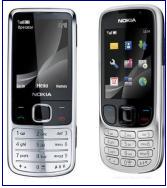
Leading Mobile handset maker Nokia India has today launched two new mobile phone, Nokia 6700 and Nokia 6303 the Classic Mobile phones in India. These phones are designed with new applications and good quality camera and vision.
Nokia 6700 classic is made up of a 5 megapixels camera with (4x digital zoom), a internal memory of 170MB been provided, 3G (HSDPA) 10MB/sec and (HSUPA) 2MB/sec network.
While the Nokia 6303 has a 3.2 mega-pixels camera with (8x digital zoom), internal memory of 64MB, it don’t have a 3G network it work with 2G (GSM 900 / 1800 / 1900), a battery backup of 7 hrs.
Both mobile phones have a stainless-steel body along with a (TFT) screen of 2.2-inches which gives a resolution of 320×240 pixels and it gives 16.7 million colors and are S40 series phones
The Nokia 6700 Classic measures 109.8 x 45 x 11.2 mm and weighs 113g, while the Nokia 6303 Classic’s dimensions are 108.8 x 46.2 x 11.7 mm and is 96gm in weight. Nokia 6700 comes with an integrated A-GPS. The 6303 supports external GPS receiver and comes with Nokia Maps application.
These phones come with a Micro-USB connector and also a 3.5 mm stereo headphone plug is provided for music. Nokia 6700 can hold up to 8GB capacity in a microSD memory card slot. Nokia has priced the 6700 Classic phone just for Rs.14000 whiles the 6303 Classic for Rs.8, 000.
Panasonic enter New Zealand healthcare market with Toughbook CF-H1 Tablet PC
Author: M Abdul Rehman // Category:
Panasonic has launched its first Mobile Clinical Assistant (MCA) – the Toughbook CF-H1 in the New Zealand market. The newest member of Panasonic’s Toughbook family of ruggedised mobile computing products, the Toughbook CF-H1 provides the healthcare profession with a full-featured mobile device that can withstand the rigours of a fast-paced healthcare environment, while offering improvements in workflow productivity, quality and mobility, all combining to achieve better outcomes for patients.
The CF-H1 has been designed in response to the needs of healthcare professionals, and Panasonic sought feedback from clinicians in all elements of research and development.
Mobile Clinical Assistants (MCAs) allow healthcare professionals to access and update medical records and critical information live at the patient’s bedside. The company says the proven benefit of an MCA is improved staff productivity, as valuable time with the patient is maximised instead of them searching through paper records, while easy access to critical information means errors can be reduced.
Panasonic’s CF-H1 MCA is a highly-durable solution. Its lightweight, ergonomic and rugged design means it will survive the knocks, bumps and drops that often occur in a busy medical environment. With a fanless design and no open ports it can be easily and safely sanitised with hospital-grade disinfectant, reducing the spread of infection. Long battery life and dual hot-swappable batteries means the CF-H1 is always working, so healthcare professionals have continuous access to critical information.
According to Steve Munns, Business Development Manager, Toughbook, Panasonic New Zealand the MCA is fast becoming an essential tool for the healthcare industry.
“In a high-pressured environment where speed and access to information is the key to delivering quality patient care and overall staff productivity, a hard-working, reliable mobile IT solution is vital”.
“Panasonic considered every need and feature requirement when designing the Toughbook CF-H1, incorporating feedback from many experienced healthcare professionals. The result is a durable, lightweight solution that is fully-featured, advanced and intuitive to operate”.
The CF-H1 features a number of smart functions to maximise time spent with patients and improve workflow. When using the CF-H1 MCA, a nurse or clinician can log on via the contactless smart card reader or fingerprint reader to ensure access to confidential patient records is secure at all times.
A RFID reader and barcode scanner can allow fast, accurate access to the patient’s full medical records, simply by scanning a patient’s barcode at their bedside, or on their wrist. This can help to reduce medication administration errors and deliver faster, safer patient care.
The integrated 2.0 megapixel auto-focus camera with dual LED lights allows users to capture images to add to a patient’s file. Photos of wounds or symptoms can then be sent electronically for further diagnosis to other professionals or monitored during healing and recovery. The 10.4 inch XGA sunlight viewable LCD screen is clear and easy to see.
A fully rugged device, the CF-H1 meets stringent military- specification MIL-STD-810F, and is capable of withstanding a drop of three feet – similar to the height of a patient’s bed. It is moisture and dust resistant and can be sprayed and wiped repeatedly with chemicals without affecting its operation.
A range of embedded wireless options includes 802.11a/b/g/ draft-n and Bluetooth 2.0. The device also ships (as an integrated option) with Qualcomm’s new Gobi technology, offering up to 7.2 Mbps mobile data links and simplifying complex multi-carrier wireless deployments for I.T. departments. The CF-H1 also comes with optional, GPS technology allowing for location awareness with improved accuracy, faster satellite acquisition time and lower power consumption.
The whole system is based on an Intel Atom Processor (1.86GHz), and comes with 1GB RAM, 80GB 1.8” shock mounted HDD and 10.4” XGA Sunlight Viewable LCD Display.


